
Infinite Blackjack No Split: Why the Rule Wrecks Naive Strategy
Infinite Blackjack No Split is the exact trap where lazy players bleed cash without ever understanding why. The dealer button loops infinitely, the seat count resets, and that single "no split" restriction quietly torches every pair-based edge you thought you owned. This is not a cosmetic rule tweak; it is a fundamental mutation of the decision tree, and anyone treating it like a standard table is donating money at industrial scale.
Here is the mechanical truth: in a conventional shoe, splitting eights or aces against a dealer six is a positive-expectation move because you can build multiple hands from one wager. Once the no-split lock engages, those hands collapse into a single forced hit or stand. The math shifts violently. Pairs of aces that should generate two independent draws now rot as a soft twelve with one card to come. Pair of eights, the classic split imperative, becomes a brutal sixteen you must stand on. 😤 Every strategy chart that ignores this is a fraud.
The Underlying Deal Engine and Its Hidden Ceiling
Most operators running Infinite Blackjack No Split rely on a continuous-deal engine that feeds cards from a virtual shoe refreshed in real time. The seat pool is theoretically unlimited, which is why the table never fills and the wait never happens. But that infinite seat model introduces a correlated-shuffle risk that sharp auditors love to probe. Because the shoe refresh logic is not a true physical shuffle, card clustering can appear across seats, and the no-split restriction prevents you from exploiting pair-driven variance spikes. The house does not need a favorable rule set when the deal engine already smooths out your upside.
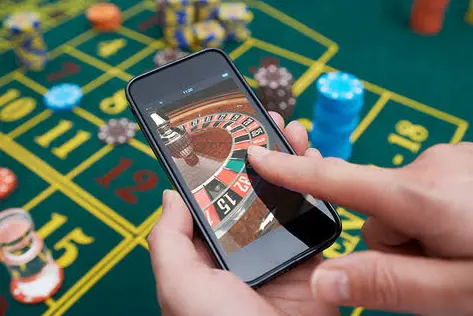
Watch the penetration figures, not the marketing. A virtual shoe with aggressive reshuffle thresholds can suppress the count-based advantage that makes blackjack survivable. If penetration sits below sixty percent, your tracking is theater. The no-split rule compounds this by removing the one scenario where multiple hands amplify a positive count. You are left with a single decision lane against a dealer who never tires, never misdeals, and never respects your pair of aces.
Infinite Blackjack Table Limits and the Bankroll Squeeze
Infinite Blackjack Table Limits follow a predictable architecture: a low floor to keep seats churning and a ceiling that looks generous until you test it under pressure. The real trap is the ratio between minimum and maximum. A wide spread invites martingale fantasies, but the no-split lock means your recovery hands lack the multiplicative power to climb out of a drawdown. You cannot double your exposure through pair splitting, so the variance curve flattens in the wrong direction — slow bleed instead of swing. 🎯
Hardware-side, the RNG certification for these continuous engines is often audited on aggregate distribution, not on seat-level correlation. That gap is where the edge hides. If the certification only proves fairness across millions of hands, it says nothing about the clustering you will actually face in a two-hour session. Aggressive operators know this and price the limits accordingly. The ceiling is not there to protect you; it is there to cap the damage a lucky streak can inflict before the engine's smoothing logic reasserts control.

Exploiting the No-Split Constraint Before It Exploits You
The only defensible play under a hard no-split regime is to abandon pair-dependent logic entirely and rebuild your decision matrix around base-hand expectation. Treat every pair as a monolithic hand from the first card. Surrender rules, where offered, become disproportionately valuable because they let you escape the worst forced stands that the no-split lock creates. 🔍 Track the dealer's upcard distribution against your revised thresholds, and never assume the continuous engine behaves like a cut shoe.
Audit the shuffle refresh interval on your first fifty hands. If the virtual shoe resets before meaningful penetration accumulates, downgrade every counting assumption to noise and shift your attention to limit-spread arbitrage. The no-split constraint and the infinite seat model are not independent features; they are two gears in the same margin machine, and the house has already calculated exactly how much of your pair-based edge it intends to keep.