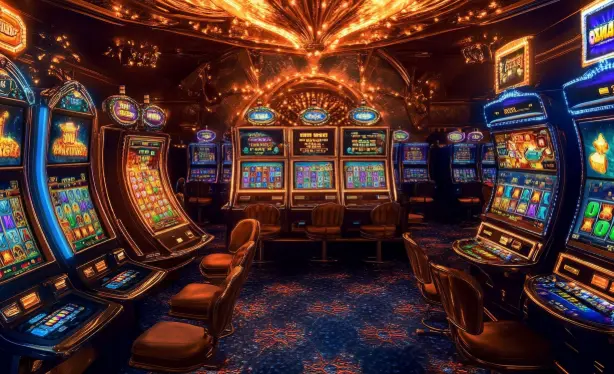
Yukon Casino Floor: Are Casinos Legal?
Yukon's casino floor operates under a fractured legal reality that most players never bother to decode, and that ignorance is exactly what the house counts on. The territory does not run a single brick-and-mortar commercial casino of its own. Every real-money table game, every slot reel, every poker room you have ever heard whispered about in Whitehorse traces back to one legal mechanism: the Yukon Lottery Commission and its charitable gaming licensing regime. That is the entire foundation. No standalone casino act, no Las Vegas-style resort license, nothing.

The Yukon Lottery Commission holds the legal authority to license and regulate gaming activity across the territory, and it exercises that authority narrowly. Pull-tabs, bingo, raffles, and lottery schemes run through licensed charitable organizations are the sanctioned backbone. If you walk into a venue and see electronic gaming terminals, those machines are almost certainly operating under a charitable gaming license attached to a specific beneficiary, not under a commercial casino permit. The distinction is not cosmetic. It determines who pockets the revenue, how the payout algorithms are audited, and whether the operation survives a regulatory sweep.
The Charity License Loophole Nobody Explains
Here is the mechanism that confuses everyone. A charity obtains a license, contracts with a gaming operator to supply terminals, and the operator takes a cut. The charity gets a slice. The territory gets a slice. The player sits at a machine that looks exactly like a commercial slot but is legally classified as a charitable gaming device. This structure is where casino legality in Yukon gets muddy. The activity is legal, but calling it a "casino" in the conventional sense is a stretch that regulators will happily correct if you push too hard.

The practical consequence for anyone auditing floor operations is this: without a valid charitable gaming license issued through the Commission, any table game or terminal accepting real money is operating outside the law. Period. The enforcement posture is not theoretical. Unlicensed operations face seizure, and the Commission has the authority to pull licenses without a court order. If a venue cannot produce its licensing paperwork on demand, the floor is illegal by definition.
Online Access and Territorial Boundaries
Offshore platforms accepting Yukon players sit in a different legal bucket entirely. The territory does not license online casino operators, and it does not explicitly criminalize residents who play on foreign-licensed sites. That gap is not permission. It is regulatory silence, and silence in gaming law is a trap for the careless. The Yukon casino floor exists in physical licensed venues, not in browser tabs, and conflating the two is how players end up with frozen withdrawals and zero recourse.
Payment processing is the tell. Licensed charitable gaming operations run through traceable channels with documented revenue splits. Offshore sites accepting Yukon players route deposits through processors that deliberately obscure the transaction chain. If the money flow looks engineered to hide, the operation is not legal in any meaningful sense. That is a hard rule, not a gray area. 🎲
What the Commission Actually Enforces
The Commission's audit trail focuses on three things: license validity, revenue distribution to the named charitable beneficiary, and terminal software integrity. Random number generation certification is mandatory for any electronic gaming device on a licensed floor. An operator running uncertified RNG firmware is committing a licensing violation regardless of what the payout history shows. This is where technical audits separate legitimate floors from operations skating on paperwork. The legal casino framework in Yukon hinges entirely on that licensing chain holding intact from beneficiary to terminal.
Any venue claiming casino status without a Commission-issued charitable gaming license is running an illegal operation, full stop.